


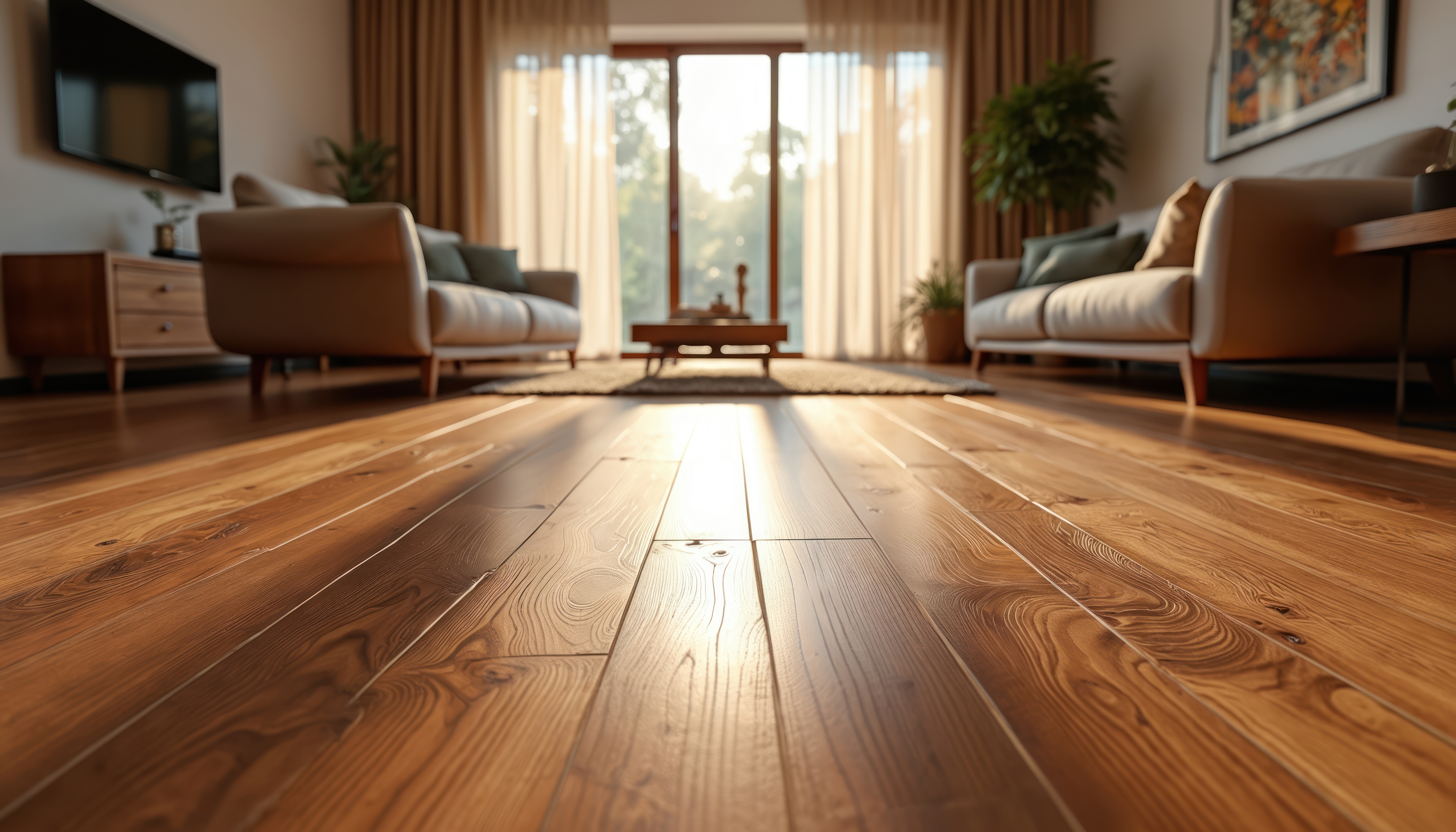
Hardwood flooring is one of the few home investments that genuinely stands the test of time, consistently adding long-term resale value and unmatched character to a property. However, when you begin shopping, you will quickly face a crucial decision: solid hardwood or engineered hardwood? While they look virtually identical on the surface, their underlying structures behave differently, meaning the right choice depends heavily on your home’s architecture and lifestyle demands.
The Classic Appeal of Solid Hardwood
Solid hardwood flooring is exactly what the name implies: a single, continuous piece of wood cut straight from a tree trunk, milled into a plank, and finished. Because it is solid wood all the way through, its greatest advantage is its longevity.
A solid wood floor can be sanded down and refinished multiple times over its lifespan. If your design tastes change in a decade, or if the floor sustains heavy scratches over the years, a professional can sand it down and apply a completely new stain. It is a traditional choice that can easily last for generations, provided it is installed in the right environment.
The Structural Engineering of Modern Wood
Engineered hardwood is genuine wood, but it is constructed differently. It features a top layer of premium hardwood veneer bonded over multiple underlying layers of high-density fiberboard or cross-ply hardwood. This cross-grain construction is a major engineering advantage.
Wood naturally expands and contracts when exposed to shifts in indoor humidity and temperature. Because the layers in engineered wood run in alternating directions, they counteract this natural movement. This makes engineered hardwood highly stable and far less likely to warp, cup, or gap over time, giving you greater peace of mind in changing climates.
Which One Belongs in Your Home?
The choice between the two often comes down to installation location and subfloor type. Solid hardwood is sensitive to moisture and should only be installed on or above ground level, over a wooden subfloor. It is not recommended for basements or concrete slabs.
Engineered hardwood is highly versatile. Its structural stability allows it to be installed on any level of the home, including basements, and it can be safely laid directly over concrete subfloors or even radiant heating systems. If you love wide planks, engineered wood is often the ideal choice because its construction prevents the warping that can sometimes occur with very wide solid wood boards.
Investing in Timeless Quality
Whether you lean toward the multi-generational lifespan of solid wood or the exceptional structural stability of engineered planks, selecting the right hardwood is an investment in your home's future. At Avalon Wood Flooring, we specialize in guiding homeowners through these technical details to ensure a flawless match.
Contact our team or visit our showroom today to explore our extensive collection of premium hardwood options.

