


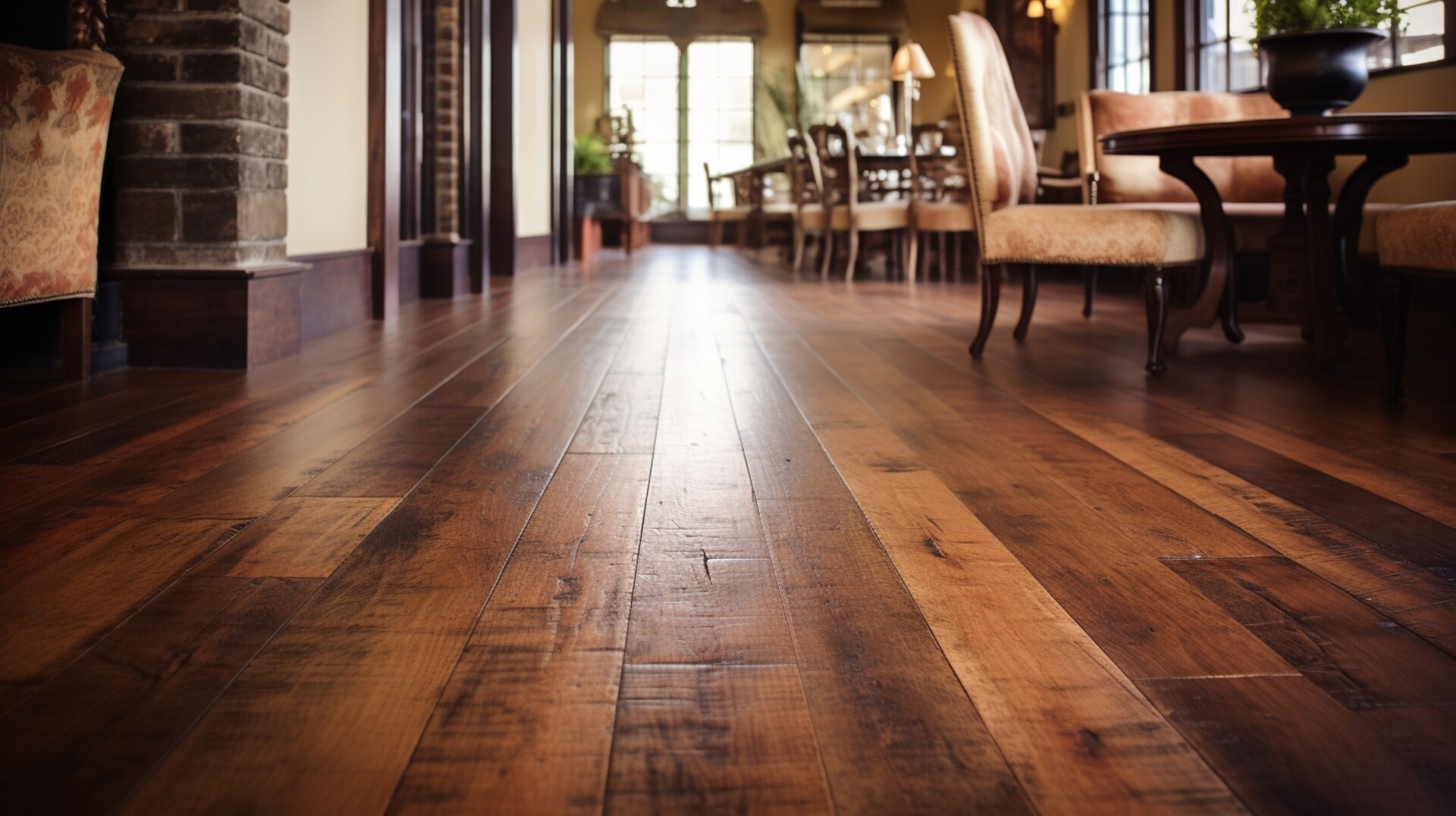
There's a reason hardwood floors have been passed down through generations of homes. A well-maintained wood floor has a kind of staying power that no other surface can quite match. And one of the biggest reasons for that longevity is the ability to refinish them, to sand away the scratches, scuffs, and wear of daily life and bring the surface back to something that looks and feels brand new.
But that process has a limit. And understanding what that limit is, and what affects it, can help you make smarter decisions about the floors you already have or the ones you're considering installing.
It all comes down to the wear layer
Hardwood flooring comes in two main forms: solid hardwood and engineered hardwood. The number of times either can be refinished depends entirely on how much wood sits above the tongue-and-groove, or above the core in engineered construction. That layer is called the wear layer, and every refinish removes a thin amount of it.
For solid hardwood, which is typically three quarters of an inch thick, most floors can be refinished anywhere from five to eight times over their lifetime, sometimes more with careful sanding. For engineered hardwood, the answer varies more widely. A thicker veneer of two millimeters or more can typically handle two to four refinishes. A thinner veneer may only tolerate one, or none at all.
What a single refinish actually removes
A professional sanding typically removes between one sixteenth and one eighth of an inch of wood per session. That might not sound like much, but it adds up. The reason you can't just keep refinishing indefinitely is that once the wear layer thins enough, the structural integrity of the floor is at risk. The boards can become prone to splintering, the tongue-and-groove joints can be compromised, and the floor loses the ability to hold finish properly.
Signs that your floor is reaching its limit
Most homeowners never actually get close to the refinish limit because floors are replaced for other reasons first. But if you're living in an older home or inheriting floors with an unknown history, there are a few things to look for.
Check near the edges of the room, particularly in corners and closets where floors see less traffic and less sanding over the years. If the boards near the wall are noticeably higher than the rest of the floor, that's a sign significant wood has been removed in the main field. You can also look at the nail heads. If they're sitting flush with or above the surface of the wood rather than slightly below it, there isn't much wear layer left.
The variables that change the answer
Not every refinish is created equal. A light screen and recoat, which scuffs the existing finish and applies a fresh coat on top without sanding down to bare wood, removes virtually nothing. These can be done several times between full refinishes and extend the life of the floor considerably.
The species of wood matters too. Harder species like hickory or white oak hold up to sanding differently than softer species. And the width of the boards affects how the floor responds to moisture and movement during the process, which factors into how aggressively a floor can be sanded each time.
When replacement is the right conversation
Sometimes the honest answer is that a floor has had a good run. If the wood is thinning, if past refinishes have left the surface uneven, or if damage goes deeper than the wear layer, replacement opens up an entirely new conversation about what's possible. Newer hardwood options, finishes, and installation methods have come a long way, and what you'd be choosing from today is a genuinely exciting range of product. Browse our flooring inspiration gallery to see what's possible for your space.
Your floors deserve an expert opinion
Not every floor tells the same story, and a quick look in person is worth more than any general guide. At Avalon Wood Flooring, we serve homeowners across Santa Ana, Irvine, Newport Beach, Corona del Mar, and Fountain Valley. Book your free in-home design consultation and we will tell you exactly where your floors stand.

